

Budapest is a unique European center of balneology, famous for its remarkable abundance of thermal springs. The Romans initiated this spa culture by building the first bath structures to exploit the healing waters of Pannonia. During the 16th and 17th centuries of the Ottoman period, Hungarians built iconic bathhouses such as Rudas Baths and Király Baths, and they are still operating today.
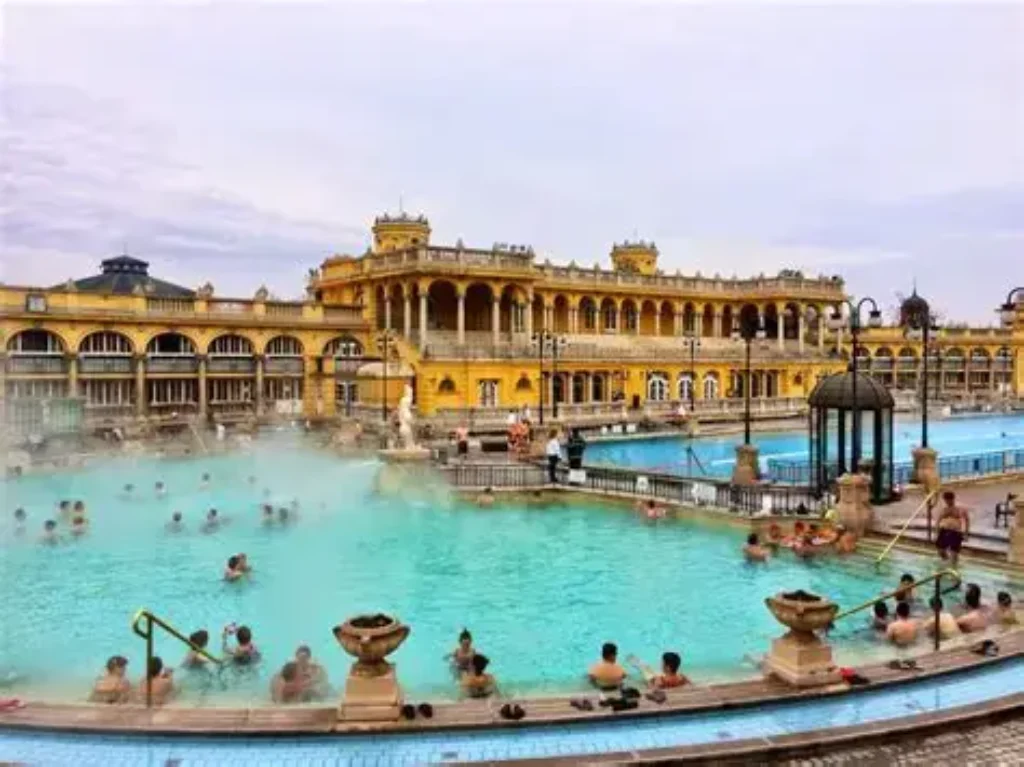
In the 19th century, detailed hydrogeological research uncovered deep, mineral‑rich sources beneath the city, paving the way for modern spa development. By the early 20th century, Budapest officially earned the title “City of Spas,” confirming its reputation as one of Europe’s leading destinations for wellness, relaxation, and health tourism.
The Representative Thermal Bath Complex
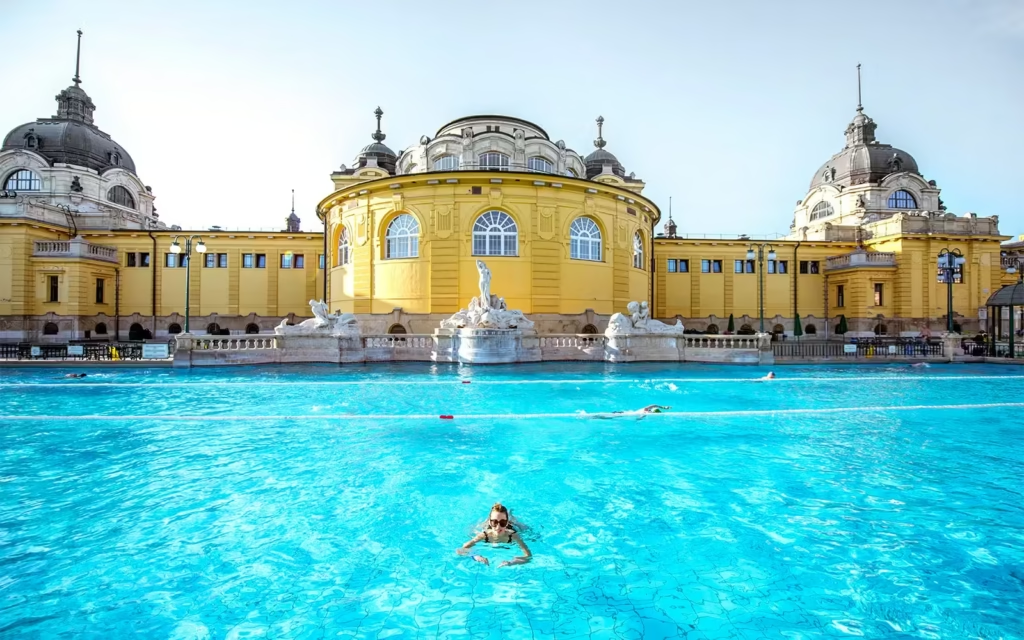
Opened in 1913, the Széchenyi Baths is Europe’s largest thermal bath complex. Designed in neo-baroque style, it became a symbol of modern balneology, combining medical therapy, recreation, and cultural heritage. The water comes from two springs at depths exceeding 1,000 meters, with temperatures between 7 and 7°C, and is rich in minerals used to treat rheumatic and orthopedic conditions.
Accessibility
-
- Metro: Line M1 (the yellow line), station Széchenyi fürdő is located directly at the entrance.
-
- Walking: 10 minutes from Heroes’ Square.
Visiting Budapest without experiencing its baths is like visiting Prague without tasting Czech beer. A visit to Széchenyi enriches the stay with a unique experience that blends history, architecture, and balneological tradition, offering benefits for both body and mind. Széchenyi Bath is not only a tourist attraction, but also a primary destination for locals, who use it for relaxation, wellness, and everyday life. A full day spent at the Széchenyi Baths, followed by an evening Danube River cruise, offers the perfect balance of wellness and wonder.